

Top ERV Manufacturer Advances Energy-Efficient Ventilation Solutions for Modern Buildings
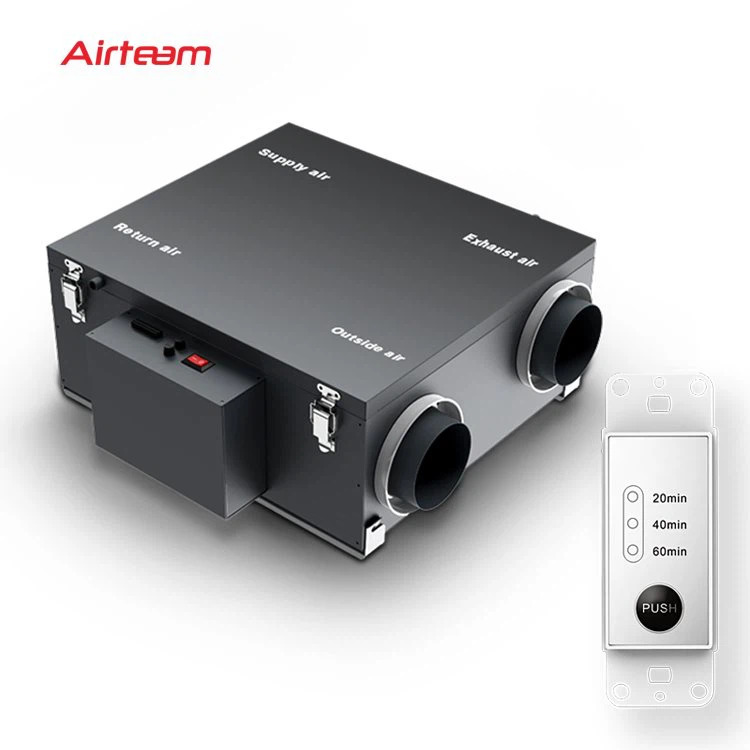
EC Motor ERV
ZHONGSHAN, GUANGDONG, CHINA, October 10, 2026 /EINPresswire.com/ -- As building owners and facility managers place greater emphasis on indoor air quality, energy efficiency, and occupant comfort, Zhongshan Aden Environmental Technology Co., Ltd. is addressing the growing demand for advanced ventilation and air purification equipment. Based in Zhongshan, Guangdong Province, China, the company focuses on the research, development, production, sales, and service of ventilation products, including Energy Recovery Ventilation systems and HRV equipment. These solutions are increasingly relevant to residential, commercial, and light industrial environments where fresh air must be supplied without unnecessarily increasing heating and cooling demands. By offering ventilation equipment in different configurations, ADEN provides buyers with options for projects that require effective air exchange, practical installation, and integration with broader heating, ventilation, and air conditioning systems.
The Growing Importance of Energy Recovery Ventilation
Modern buildings are designed to manage heating and cooling loads more carefully than ever. Improved insulation, sealed windows, and airtight construction can reduce unwanted heat loss or gain, but they also make planned ventilation more important. Without sufficient fresh-air exchange, indoor spaces may experience elevated humidity, accumulated odors, and increased concentrations of carbon dioxide and other indoor pollutants.
Opening windows can provide ventilation, but it may be impractical in buildings affected by outdoor pollution, noise, extreme temperatures, or security concerns. Mechanical ventilation offers a more controlled approach by moving air into and out of indoor spaces according to the needs of the building.
Energy Recovery Ventilation, commonly known as ERV, adds another function to this process. In addition to exchanging indoor and outdoor air, an ERV transfers a portion of the energy between outgoing and incoming air streams. Depending on the system design, it can transfer both sensible heat and some moisture, helping reduce the energy required to condition incoming outdoor air.
This feature can be particularly useful in climates where outdoor temperatures and humidity differ substantially from indoor conditions. During hot, humid weather, an appropriate ERV system may help limit the moisture load introduced with incoming air. During colder periods, it may recover some heat from exhaust air before that air leaves the building. Actual performance depends on the unit design, airflow balance, operating conditions, and installation quality.
For building developers, mechanical contractors, and HVAC distributors, energy recovery ventilation has therefore become an important option when planning systems that combine fresh-air supply with energy-conscious operation. Zhongshan Aden Environmental Technology Co., Ltd. operates in this market with ventilation products intended for different building layouts and user requirements.
Understanding the Difference Between ERV and HRV
Although ERV and HRV systems share a similar purpose, the two technologies differ in how they exchange energy.
A Heat Recovery Ventilation system, or HRV, primarily transfers sensible heat between outgoing and incoming air streams. In winter, for example, the warmer exhaust air can preheat incoming cold outdoor air. In warmer conditions, heat transfer can help reduce the temperature difference between the two streams, depending on the operating mode.
An Energy Recovery Ventilation system, or ERV, can transfer sensible heat and, when equipped with an appropriate enthalpy-exchange core, a portion of the moisture between air streams. This additional moisture transfer may be beneficial in humid climates or buildings where indoor humidity control is an important consideration.
Neither technology is automatically the best choice for every project. The decision depends on local climate, indoor humidity targets, occupancy, building airtightness, ventilation requirements, and the wider HVAC design. In certain buildings, an HRV may provide the required performance; in others, an ERV may offer advantages by helping manage both temperature and moisture loads.
Zhongshan Aden Environmental Technology Co., Ltd. supplies both Energy Recovery Ventilation and HRV products, allowing buyers to explore different approaches to controlled ventilation. Before specifying a system, designers should confirm the actual exchange technology used by the selected model, along with its airflow capacity, filtration arrangement, pressure characteristics, and energy performance data.
Product selection should be based on the technical documentation for the exact unit rather than on the ERV or HRV label alone. This is particularly important when comparing products designed for different climates or installation environments.
ADEN’s Approach to Ventilation and Air Purification
The ventilation equipment market includes a wide variety of products, from compact residential units to systems intended for larger commercial spaces. Buyers increasingly look for suppliers that understand not only the equipment itself but also the practical demands of installation, maintenance, and system integration.
Zhongshan Aden Environmental Technology Co., Ltd. describes its business as covering product research and development, manufacturing, sales, and service in ventilation and air purification. Its portfolio includes ERV and HRV systems, ventilation fans, air curtains, and air purification equipment.
The company’s official website identifies its location in Dongsheng Town, Zhongshan City, Guangdong Province, and reports a production workshop area of more than 20,000 square meters. It also describes production capabilities that include mold manufacturing and metal-processing equipment. These facilities form part of the company’s stated manufacturing infrastructure for ventilation and related products.
For HVAC distributors and project contractors, a supplier’s product range can be useful when evaluating equipment for different installation conditions. A compact residential unit may be appropriate for an apartment or small office, while a ceiling-mounted or commercial configuration may be better suited to a project with greater airflow requirements or a concealed installation.
However, selecting the correct model requires more than comparing external dimensions or nominal airflow. The unit must deliver the necessary ventilation rate under the actual system resistance, including ductwork, filters, grilles, and other connected components. The availability of installation instructions, replacement filters, and technical support should also be considered during procurement.
Residential Applications: Fresh Air and Indoor Comfort
Residential ventilation has become an important consideration as homeowners seek more comfortable indoor environments and better control over air exchange. Apartments, detached houses, and renovated properties can each present different challenges, particularly where window opening is limited or where airtight construction reduces uncontrolled air movement.
An appropriately sized ERV or HRV can provide a planned route for supplying outdoor air and removing stale indoor air. Depending on the unit and system layout, this may help support a more consistent ventilation strategy throughout the home.
ADEN offers residential ventilation equipment in configurations that include wall-mounted, ceiling-type, cabinet-style, and other product formats. Wall-mounted units may be considered for renovation projects where installing extensive ductwork is difficult. Ceiling-mounted or concealed systems can be suitable for buildings where space is available above ceilings or within designated service areas.
The choice between these configurations depends on the building layout, available installation space, airflow requirements, and the homeowner’s expectations for noise and maintenance. A wall-mounted unit may simplify installation in some settings, but it still requires appropriate outdoor air connections and sufficient space for servicing. A ducted system can distribute air across multiple rooms, although its performance depends on careful duct design and balancing.
Filtration is another key consideration. Ventilation units may use filters to capture particles from incoming air, but filtration performance varies according to the filter type, installation, airflow, and maintenance condition. Buyers should review the specified filter grade and replacement interval rather than assuming that all ERV and HRV units provide the same air-cleaning capability.
Ventilation equipment should also be treated as one component of a broader indoor environmental strategy. Source control, appropriate kitchen and bathroom exhaust, humidity management, and regular maintenance remain important even when an ERV or HRV is installed.
Commercial Buildings and Light Commercial Projects
Offices, clinics, classrooms, retail spaces, and other commercial buildings have ventilation needs shaped by occupancy levels, operating hours, room layouts, and local building regulations. A system that works well in a small residential property may not provide sufficient airflow for a busy office or public space.
Commercial ventilation planning typically begins with an assessment of the required outdoor air supply. Designers must consider the number of occupants, the intended use of each room, applicable ventilation standards, and the distribution of air throughout the building. Energy recovery can then be evaluated as part of the overall HVAC design.
For these projects, buyers may prioritize airflow capacity, fan energy consumption, filter access, control options, sound levels, and the ability to connect the unit to existing ductwork or building controls. Units must be selected to operate effectively against the resistance of the complete air distribution system, not merely at an unrestricted or free-air condition.
Energy recovery may help reduce the heating or cooling energy associated with ventilation, but savings depend on the local climate, operating schedule, system efficiency, and control strategy. An engineering assessment can help determine whether the expected energy benefits justify the initial investment and maintenance requirements.
Zhongshan Aden Environmental Technology Co., Ltd. offers ventilation product categories that can be considered for residential and selected commercial applications. Project buyers should confirm the intended duty of each model and review the technical data before incorporating it into a specification. For larger buildings, consultation with an HVAC engineer is advisable to ensure that the selected equipment meets the ventilation demand and integrates properly with the complete system.
Product Design, Filtration, and Operating Features
The performance of an ERV or HRV depends on the combined operation of several components. Fans move air through the unit, the heat-exchange core transfers energy between the air streams, filters capture a portion of airborne particles, and controls regulate operation according to the unit’s design.
Fan selection influences airflow, power consumption, and acoustic performance. High-efficiency motor technologies may help reduce electrical demand, while appropriate fan and housing design can contribute to stable operation. However, actual energy consumption should be evaluated using model-specific performance data at the required airflow and static pressure.
The heat-exchange core is another important element. Its material, geometry, and construction affect the transfer of heat and, in ERV systems, moisture. Core performance should be assessed alongside airflow balance, leakage characteristics, cleaning requirements, and suitability for the expected climate.
ADEN’s published product information describes selected models with features such as DC motors, multiple filtration stages, touch-panel controls, remote-control options, and automatic defrost functions. These features are not necessarily present in every model, so buyers should verify the specifications of the particular product being considered.
Automatic defrost can be useful in colder operating environments where frost may accumulate on heat-exchange surfaces. The appropriate control strategy depends on outdoor temperature, humidity, airflow, and the unit’s design. Similarly, filtration claims should be checked against the exact filter specification and supporting documentation.
Controls can improve convenience by allowing users to adjust fan speeds or select operating modes. More advanced installations may benefit from demand-based ventilation strategies using suitable sensors, but the available control functions vary by model. Buyers should establish which features are included as standard and which require additional components.
Manufacturing Quality and Supplier Evaluation
Choosing a ventilation manufacturer involves evaluating product performance, manufacturing processes, technical documentation, and after-sales arrangements. Since ERV and HRV systems operate as part of a building’s ventilation infrastructure, product consistency and long-term serviceability can be just as important as initial cost.
Zhongshan Aden Environmental Technology Co., Ltd. states that it has more than 50 independent intellectual property patents and has passed ISO 9001 quality management system certification. The company also lists certification requirements and product standards relevant to different markets, including CCC, CB, CE, RoHS, SAA, and UL. Buyers should confirm the current status, scope, and applicability of each certificate for the specific model and destination market.
A practical supplier assessment should include a review of technical specifications, test reports, installation manuals, maintenance guidance, warranty terms, and replacement-filter availability. Where a project has specific sound, energy, fire-safety, or electrical requirements, the relevant documentation should be confirmed before the purchase order is issued.
Importers and distributors may also need to discuss packaging, labeling, production lead times, sample evaluation, and spare-parts supply. For projects involving several units, consistency between delivered products and the approved specification is particularly important.
The company’s stated focus on product development and manufacturing provides a starting point for buyers assessing potential cooperation. A final procurement decision should nevertheless be based on verified technical information, commercial terms, and the requirements of the intended installation.
Looking Ahead: Ventilation as Part of Energy-Conscious Building Design
Buildings are increasingly expected to provide comfortable indoor environments while managing energy consumption and maintaining adequate fresh-air supply. ERV and HRV systems can contribute to these objectives by recovering energy from exhaust air, reducing some of the conditioning load associated with outdoor ventilation.
Their effectiveness depends on correct system design, appropriate sizing, careful installation, and regular maintenance. Filters must be replaced when required, airflows should be balanced, and the equipment should be operated within the manufacturer’s specified conditions. Energy recovery cannot replace proper ventilation design or eliminate the need for other indoor air quality measures.
For building owners, contractors, and HVAC distributors, comparing ERV and HRV products requires attention to both technical performance and practical operation. Airflow at the required static pressure, energy consumption, sound levels, filtration, control options, climate suitability, and service support are all important factors.
Zhongshan Aden Environmental Technology Co., Ltd. participates in this market with a product portfolio that includes Energy Recovery Ventilation, HRV, ventilation fans, air curtains, and air purification equipment. Its range offers buyers different product categories to investigate as they develop ventilation solutions for homes and commercial spaces. By matching equipment to actual project requirements and verifying the specifications of each model, buyers can make more informed decisions about indoor air quality and long-term operating performance.
About Zhongshan Aden Environmental Technology Co., Ltd.
Zhongshan Aden Environmental Technology Co., Ltd. is a ventilation and air purification equipment manufacturer based in Dongsheng Town, Zhongshan City, Guangdong Province, China. Established in 2014, the company focuses on the research and development, production, sales, and service of ERV and HRV systems, ventilation fans, air curtains, and air purification products. Its product portfolio includes wall-mounted, ceiling-type, cabinet-style, and other ventilation configurations for different installation environments. The company reports a workshop area of more than 20,000 square meters and highlights manufacturing capabilities that include mold production and metal processing. It also states that it has obtained ISO 9001 quality management system certification and holds more than 50 independent intellectual property patents. Buyers seeking product specifications, technical information, or cooperation opportunities can visit the company’s official website at www.adencn.com.
Address: No.5 Shunchang Road, Dongsheng Town, Zhongshan City, Guangdong Province, China
Official Website: https://www.adencn.com/
Wu
Zhongshan Aden Environmental Technology Co., Ltd.
info@adencn.com
Legal Disclaimer:
EIN Presswire provides this news content "as is" without warranty of any kind. We do not accept any responsibility or liability for the accuracy, content, images, videos, licenses, completeness, legality, or reliability of the information contained in this article. If you have any complaints or copyright issues related to this article, kindly contact the author above.
